
How to name a coffee shop: 5 steps, the statistics of real names, and AI-generated examples
- Most successful coffee-shop names follow one pattern: a distinctive word + a trade word (Blue Bottle Coffee, Stumptown Coffee Roasters). In real US map data, 63% put the trade word last.
- Decide the direction before you brainstorm: descriptive, place-based, story-based, or a single stylish word. Ten names from one direction are easy to compare; ten from ten directions are not.
- A name has to pass three tests: say it, spell it, search it. Then check your state's business registry, the USPTO trademark search, and the domain before you order a sign.
- The best names come with a story you can tell in one sentence. The story is what customers repeat.
Before the espresso machine, before the lease is signed, one decision blocks everything else: the name. The sign, the cups, the Instagram handle, the LLC filing and the Google Business listing all wait for it. This guide walks through the five steps we use, shows what real US coffee-shop names actually look like in the data, and ends with names our AI generated for a realistic Portland brief, with the reasoning for each one.
Step 1. Write the concept in one sentence
A name is a compressed concept. "A small-batch roaster on a quiet corner where regulars are known by name" already points toward warmth, craft and neighborhood. "A fast espresso bar for commuters" points somewhere else entirely. If you cannot finish the sentence, no list of names will feel right, because there is nothing for them to match.
Three questions are enough:
- What is the shop really about: the coffee itself, the food, or the room?
- Who do you want walking in: neighbors every morning, or people who drive across town once?
- How should they feel when they leave?
Step 2. Pick a direction before you brainstorm
Coffee-shop names fall into a handful of directions. Choose one first, then generate candidates inside it. Ten names from one direction can be compared; ten names from ten directions cannot.
| Direction | Examples | Works best for |
|---|---|---|
| Descriptive (word + Coffee / Roasters / Café) | Blue Bottle Coffee, Stumptown Coffee Roasters, Kindling Coffee | The mainstream. Nearly every chain uses it, and in our data most independents do too. The name says what the business is the moment it is read. |
| Place-based | Stumptown (Portland's nickname), Intelligentsia's Wicker Park roots, Neighbor Nook Coffee | Shops that live on being local: one location, regulars, a street everyone knows. |
| Story or object | Tinderbox Roastery (a stove-top roasting story), Hob & Lantern | Owners with a real origin story they will tell every day. |
| Old or rare English word | Inglenook, Hearth, Kith | Shops that want warmth without a cliché; check that customers can pronounce it. |
| Single stylish word | Ember Row, Low Flame, Verve | Modern interiors, younger crowds, brands that plan to sell beans online. |
| Owner's name | Peet's Coffee, Philz Coffee, Joe's | Founders whose face is the brand. Adds a possessive that 13% of real names carry. |
If you are unsure, start with the descriptive direction. A name like "Kindling Coffee" tells a passer-by what the shop is in one glance, and it tells Google the same thing. A coined or single-word name buys personality at the price of explanation, which the sign, the location and the marketing then have to supply.
Step 3. Say it, spell it, search it
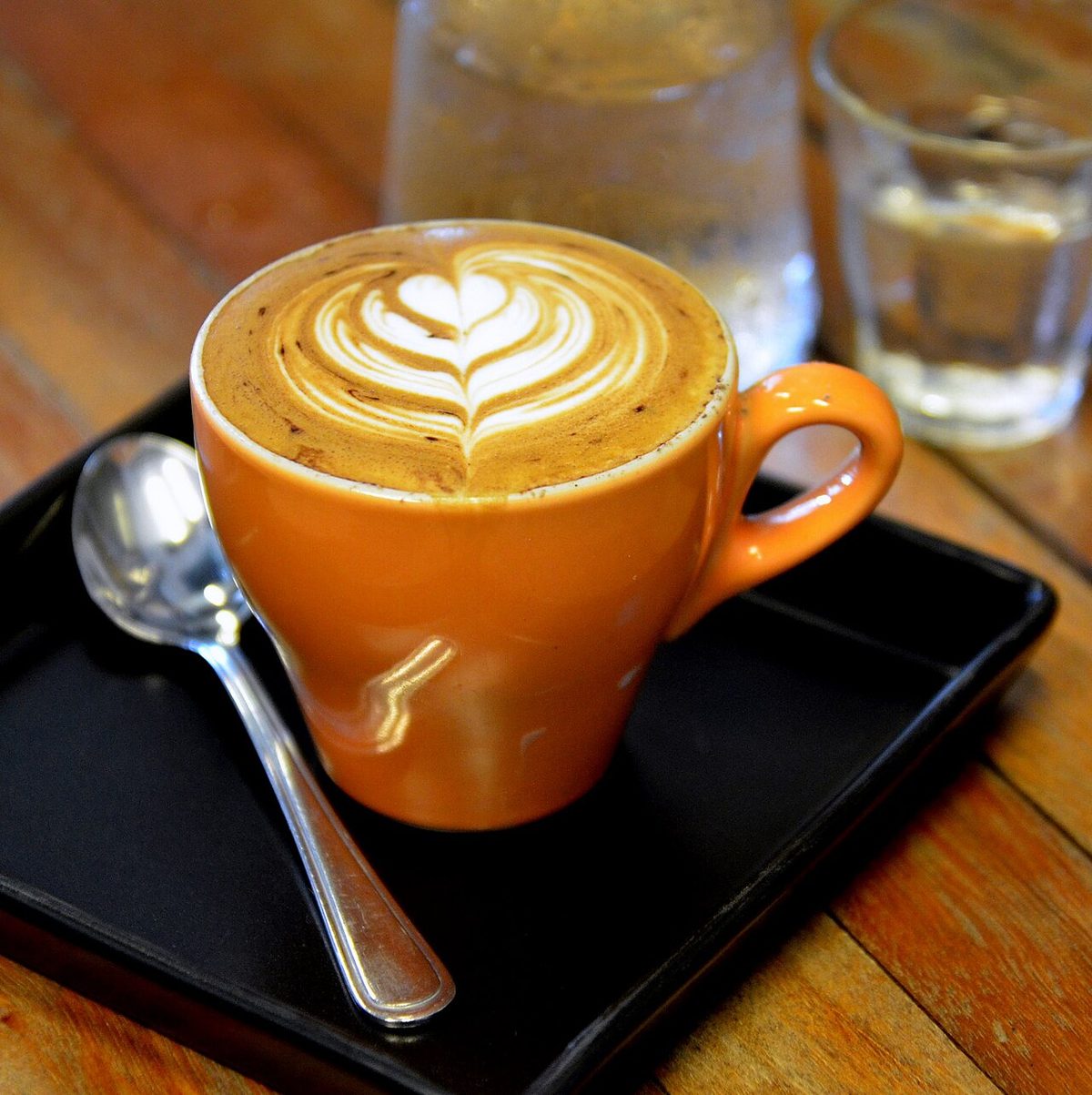
A coffee-shop name lives in the mouth. It is said across the counter, recommended to a friend, typed into a phone at a bus stop. Run every candidate through three tests:
- Say it. Can a stranger pronounce it from the sign? French and Italian borrowings often fail here.
- Spell it. Can someone who only heard it type it into Maps? "Kaffee" and "Koffee" lose customers to "Coffee".
- Search it. Does the exact phrase return a page of unrelated results, or worse, a competitor?
The practical target is two or three words, which is exactly what the data shows: the average real coffee-shop name is 3.2 words long.
Step 4. Check the registry, the trademark database and the domain
Before you fall in love with a name, spend twenty minutes on three searches. None of them costs money.
- Your state's business-entity search. Every US state has one (usually on the Secretary of State site). If you will form an LLC or corporation, the name has to be distinguishable from existing entities in that state.
- The USPTO trademark search. Search the exact name and close variants in the coffee and restaurant classes. A registered mark on a similar name in your field is a reason to move on, not to hope.
- The domain and the handles. The exact .com is not essential for a neighborhood shop, but the Instagram handle and the Google Business listing are. Check both before you print anything.
Step 5. Keep a name with a story you can tell in one sentence
This is the step most guides skip and the one that matters most on the day you open. "Why is it called that?" is the first question a regular asks and the first question a local reporter asks. A name with a one-sentence answer gets repeated. A name chosen only for its sound does not.
Starbucks is a character from Moby-Dick. Blue Bottle is named after Vienna's first coffee house. Stumptown is Portland's nickname. Each answer takes five seconds and gets told thousands of times. When you compare final candidates, ask which one you would enjoy explaining every day for ten years.
Where famous coffee names came from
Every one of these follows one of the directions above. Notice how many are a story plus a trade word.
| Name | Where it came from |
|---|---|
| Starbucks | Named after Starbuck, the first mate in Herman Melville's Moby-Dick. The founders wanted a name that evoked the seafaring traders who carried coffee around the world. Story direction, plus the trade word "Coffee" on the original sign. |
| Peet's Coffee | Alfred Peet, a Dutch immigrant who opened his first store in Berkeley in 1966 and trained the founders of Starbucks. Owner's name plus trade word. |
| Blue Bottle Coffee | Named after Vienna's first coffee house, Hof zur Blauen Flasche ("House under the Blue Bottle"), opened in the 1680s. A history story plus the trade word. |
| Stumptown Coffee Roasters | Stumptown is an old nickname for Portland, Oregon, from the tree stumps left as the city was cleared. Place-based plus trade word. |
| Dunkin' | From dunking a donut in coffee, the founder's observation of how customers ate. Originally Dunkin' Donuts; shortened in 2019 as coffee became the main product. |
| Caribou Coffee | The founders saw caribou on a trip through Alaska and named the company after the memory. Story direction plus trade word. |
| Dutch Bros. Coffee | Founded by brothers Dane and Travis Boersma, of Dutch descent, in Grants Pass, Oregon. Owner-based plus trade word. |
| Tim Hortons | Named after Tim Horton, the Canadian hockey player who co-founded the chain in 1964. Owner's name; the trade word was dropped from the sign over time. |
| Costa Coffee | Founded in London in 1971 by the Italian brothers Sergio and Bruno Costa. Family name plus trade word. |
| Lavazza | Luigi Lavazza, who opened a grocery in Turin in 1895 and began blending coffee. A single family name that became the brand. |
Origins are as reported by the companies themselves and in standard business references. Names and logos belong to their owners; they are shown here only to illustrate how names are built.
The legal side: what a coffee-shop name has to satisfy in the US
Naming a coffee shop is not heavily regulated, but four checks are unavoidable. They differ by state, so treat this as a map, not legal advice.
| Business entity name | If you form an LLC or a corporation, the state must accept the name. It has to be distinguishable from existing entities in that state and usually has to carry a designator (LLC, Inc.). Words like "Bank" or "Insurance" are restricted in most states. |
|---|---|
| DBA / fictitious name | If you trade under a name different from the legal entity ("Kindling Coffee" run by "Kindling Holdings LLC"), most states or counties require a DBA filing, often published in a local paper. Fees are typically $10–$100. |
| Trademark | Registering is optional; searching is not. A federal registration with the USPTO costs from $350 per class and takes months, but it protects the name nationwide. Search first: a similar registered mark in the coffee or restaurant classes is a real risk. |
| Signs and permits | Local sign ordinances limit size and lighting, not wording. Health permits and food-service licenses are issued to the business, not to the name, but the name on the permit should match the DBA. |
| Domain and handles | Not legal requirements, but check the exact handle on Instagram and the Google Business listing. Duplicate names in the same city confuse Maps and reviews. |
Fees and procedures change; confirm with your state's Secretary of State site and the USPTO before filing.
Live statistics from 5,834 real US businesses whose name contains "coffee", "cafe", "espresso", "roasters" (map data, sampled). SmartName reads the same statistics before it designs your directions.
| Where the trade word sits | Last, as in "Blue Fern Coffee": 62.8% · first: 7.7% · middle: 29.5% |
|---|---|
| Length | Average 3.2 words |
| Starts with "The" | 4.6% |
| Uses "&" or "and" | 19.4% |
| Owner's name with 's | 13.4% |
| Words most often paired with it | house (3.9%), bar (3.8%), bakery (3.6%), shop (2.5%), tea (1.9%), street (1.3%), bean (0.9%), market (0.9%) |
| Common last words (other than the trade word) | bar (3%), house (2.8%), shop (2.2%), bakery (1.1%), tea (0.9%) |
A few real names from the sample: Cafe of Life Chiropractic · Local Good Coffee Co · 29th Parallel Coffee · Ten Pennies Internet Cafe · Superette Wine, Bar, Cafe · Sharon's Cafe · The Burbank Cafe · Habesha Restaurant & Cafe · Federal Coffee · Aroma Bakery & Coffee · Bayti Cafe · Bagel Deli-Cafe
Examples: names the AI generated for a Portland coffee-shop brief
We ran a realistic brief through SmartName on the live system (Light plan, 10 names in 5 directions) and picked three. The brief: A neighborhood coffee shop in Portland, Oregon. Slow pour-over, small-batch roasting on site, house-baked pastries, a quiet room for reading and working. Rules given: Plain English words · Should say what we do · avoid bean, brew, grind. Everything below is shown exactly as the system delivered it, including the etymology and the written case for each name.
These names were generated for a test brief during development; they are not real businesses. Before using any name, search your state's business registry and the USPTO trademark database. More generated examples across other industries.
Three mistakes to avoid
- Charming but unpronounceable — "Chouchou", "Hygge" and "Kaffeehaus" are lovely on paper. A name that a stranger cannot say from the sign does not get recommended, and a name they cannot spell does not get searched.
- Naming it after this year's trend — "Lab", "Collective", "Co." and "Roastery" all cycle. Ask whether the name will still sound right on the tenth anniversary.
- Trying to say everything — Owners pack the mission into the name and end up with five words. Let the name be short and let the story do the explaining.
What it costs to get help with a name
A naming agency typically charges from $5,000 to well over $50,000 for a project, and a freelance namer from $500 to $3,000. Crowdsourcing contests start around $300. SmartName runs the process above on a current AI model and delivers 10 to 40 names, each with its etymology and a written case, for $39 to $119, in minutes rather than weeks. It does not replace the trademark search in Step 4; nothing does.
Frequently asked questions
Should a coffee-shop name include the word "coffee"?
Usually, yes. In our sample of real US coffee-shop names, most include a trade word (coffee, café, espresso, roasters) and 63% put it last. Adding "Coffee" costs nothing on a sign and tells both passers-by and search engines what the business is. Single-word names work too, but they need a stronger sign and more marketing.
Can two coffee shops have the same name?
In different states, often yes, unless one holds a federal trademark. In the same state, the business-entity registry will usually reject an identical LLC name. In the same city, it is simply bad for both of you: reviews and map listings get mixed up.
How long should a coffee-shop name be?
Two or three words. The average real name in our data is 3.2 words. Longer names get shortened by customers anyway.
Does SmartName check trademarks?
No. SmartName generates names and the case for each, and points you to the USPTO and your state registry to check availability. Always search before you print.
Can I get names for a café that also serves food?
Yes. Tell the questionnaire what the shop is really about. If food matters as much as coffee, the directions will use "Kitchen", "Bakery" or "Café" rather than "Roasters".
Related: How to name a business: the complete guide · How to name a bakery · How to name a restaurant · 60 coffee shop name ideas with meanings