
How to name a restaurant: 5 steps, what 5,700 real restaurant names show, and AI-generated examples
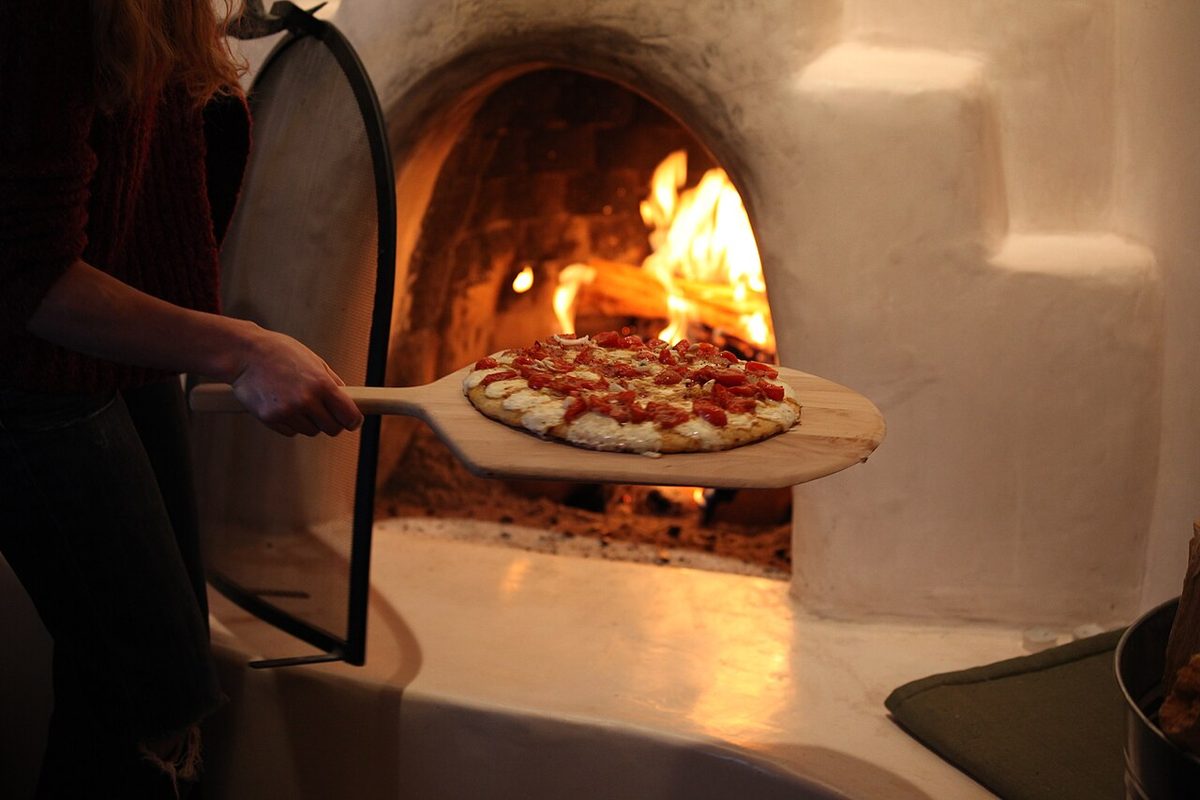
- Restaurant names are the most descriptive and the most "&"-heavy of any trade: 82% of real US restaurant names put the trade word (Kitchen, Grill, Bistro, Bar) last, and 38% join two words with "&" or "and".
- Pick a direction before you brainstorm: word + Kitchen, the fire (hearth, ember, oven), the rhythm of the menu (Tuesday, Mud Season), or a single twist word.
- Run every candidate through say it, spell it, search it, then check the state registry, the USPTO trademark search, and the Google Business listing before you sign for the sign.
- The name will be asked about at every table. Keep the one with a story you can tell while pouring water.
Restaurant names carry more weight than most: they are on the awning, in the reservation confirmation, in every review, and in the sentence "want to try that new place called…". The good news is that the trade has clear patterns, and the data shows them plainly. This guide gives the five steps, what real US restaurant names look like, where famous restaurant names came from, and names our AI generated for a Vermont farm-to-table brief, with the reasoning for each.
Step 1. Say what the restaurant is, in one sentence
"A 40-seat farm-to-table room with a wood oven and a menu rewritten every Tuesday" already suggests warmth, fire, seasons and a weekly rhythm. "A fast-casual taco counter near campus" suggests speed and price. The sentence chooses the tone and, usually, the trade word: Kitchen for warmth, Grill or Bar for casual, Bistro or Table for a little polish, Cantina or Taqueria for cuisine.
Step 2. Pick a direction before you brainstorm
| Direction | Examples | Works best for |
|---|---|---|
| Descriptive (word + Kitchen / Grill / Bistro) | Thirty Mile Kitchen, Handwritten Kitchen, Hen of the Wood | The mainstream and the safest: 82% of real names end with a trade word. |
| The fire | Hob & Hearth, Hearthstone Kitchen, Tuesday Ember | Wood-fired, grill and barbecue restaurants. |
| The rhythm or the season | Tuesday, Mud Season Kitchen, First Frost | Restaurants whose menu changes on a schedule and says so. |
| Two words with & | Crate & Coal Kitchen, Salt & Straw, Hen & Hound | The single most common restaurant form: 38% of real names. |
| Cuisine or place | Chipotle, Noma (nordisk mad), Bayshore | Restaurants defined by a cuisine or a location. |
| Single twist word | Loam, Tuesday, Husk | Chef-driven rooms that will be written about; needs a strong sign. |
One direction, ten names, then the next direction. Ten names from one direction can be compared; ten from ten cannot.
Step 3. Say it, spell it, search it
- Say it. Reservations are made by phone and by voice assistant. "Reserve a table at Loam" works; "at L'Auberge du Coq" often does not.
- Spell it. Reviews and maps are typed. Creative spellings cost you reviews that land on someone else.
- Search it. Restaurant names repeat across the country; search the exact phrase plus your city, and check Google Maps for a duplicate nearby.
Real restaurant names average 3.7 words, the longest of any trade, mostly because so many are "X & Y Kitchen". Aim for two or three.
Step 4. Check the registry, the trademark database and the map listing
- State business-entity search for the LLC name.
- USPTO trademark search in the restaurant-services class. Chains register aggressively: Shake Shack, Sweetgreen and Chipotle all hold marks, and a close variant is a problem, not a tribute.
- Google Business and the reservation platforms. A duplicate name in the same metro area sends your reviews and bookings to someone else. Check before you decide.
Step 5. Keep a name with a story you can tell at the table
"Why Thirty Mile Kitchen?" "Everything on the plate grew within thirty miles." That is the whole marketing plan in one sentence, and every server can say it. When you compare final candidates, pick the one whose story you would be glad to tell two hundred times a week.
Where famous restaurant names came from
| Name | Where it came from |
|---|---|
| Chipotle | A chipotle is a smoked, dried jalapeño. Founder Steve Ells named the Denver restaurant, opened in 1993, after an ingredient. Cuisine direction, one word. |
| Shake Shack | Started as a hot-dog cart in Madison Square Park in 2001; became a permanent "shack" selling shakes in 2004. The name is what it was. |
| Noma | A blend of the Danish nordisk mad, "Nordic food". The Copenhagen restaurant, opened in 2003, named its whole philosophy in two syllables. |
| The Cheesecake Factory | Evelyn Overton baked cheesecakes in her Detroit basement from the 1940s; the family opened a wholesale bakery, then in 1978 the first restaurant, named after the product. |
| Sweetgreen | Three Georgetown students founded it in 2007. The name puts the promise (sweet, green) into one word; no trade word needed because the salad is the concept. |
| Five Guys | Jerry Murrell and his four sons opened the first store in Arlington, Virginia, in 1986. The five guys are the family. Founder direction. |
| Eleven Madison Park | The address: 11 Madison Avenue at Madison Square Park, New York. Place direction; the number became the brand. |
| Alinea | From the typographic symbol ⁋ (alinea, "a new train of thought"), used to mark a new paragraph. Grant Achatz's Chicago restaurant, opened in 2005, named its intent. |
| Hen of the Wood | The Vermont restaurant named after the maitake mushroom, also called hen of the woods, which grows in the surrounding forests. Ingredient and place. |
Origins as reported by the restaurants and in standard references. Names belong to their owners and are shown only to illustrate how names are built.
The legal side: what a restaurant name has to satisfy in the US
| Business entity name | An LLC or corporation name must be distinguishable in the state and normally carry a designator. Most restaurants also file a DBA for the trading name. |
|---|---|
| Liquor license | Liquor licenses are issued to the entity and the premises, and the application asks for the trade name. Some states require the licensed name to match signage exactly; changing the name later can mean amending the license. |
| Health permit | Issued to the establishment. The name on the permit should match the DBA; inspectors and delivery platforms will use it. |
| Trademark | Search the USPTO database in the restaurant-services class. Chains register widely; a similar name in the same class is a real risk. |
| Menu and claims | Words like "Organic" in a name trigger USDA rules; "Farm-to-table" is unregulated but invites scrutiny. Keep regulated claims out of the name. |
Liquor and health rules vary by state and city; confirm with your local licensing authority.
Live statistics from 5,689 real US businesses whose name contains "restaurant", "kitchen", "bistro", "grill", "eatery" (map data, sampled). SmartName reads the same statistics before it designs your directions.
| Where the trade word sits | Last, as in "Blue Fern Kitchen": 81.9% · first: 1.2% · middle: 16.9% |
|---|---|
| Length | Average 3.7 words |
| Starts with "The" | 5% |
| Uses "&" or "and" | 38% |
| Owner's name with 's | 23.8% |
| Words most often paired with it | bar (19.8%), mexican (7.4%), italian (2.6%), family (2.6%), pub (2.3%), sports (2.2%), thai (1.9%), pizza (1.9%) |
| Common last words (other than the trade word) | bar (5.4%), lounge (1.1%), cantina (0.7%), pub (0.5%), pizzeria (0.4%) |
A few real names from the sample: Mahan Indian Restaurant · Mama Guzzardi's Italian Restaurant · Pasta House: Italian Restaurant · Mom Kitchen - Hong Kong Cafe · Sharkys Bar & Grill · Kohola Reef Restaurant and Social Club · Garcia's Mexican Grill & Cantina · Manda Le Restaurant Bar and Grill · Off The Grill by Chef Q · Chow's Asian Bistro · Fiery Sky Asian Kitchen · The Hooley Pub & Kitchen
Examples: names the AI generated for a Vermont farm-to-table brief
We ran a realistic brief through SmartName on the live system (Light plan, 10 names in 5 directions) and picked three. The brief: A 40-seat farm-to-table restaurant in Burlington, Vermont. Seasonal menu that changes weekly, wood-fired oven, most produce from farms within 30 miles. Rules given: Plain English words · Should say what we do · avoid farm, table, harvest. Everything below is shown exactly as the system delivered it, including the etymology and the written case for each name.
These names were generated for a test brief during development; they are not real businesses. Before using any name, search your state's business registry and the USPTO trademark database. More generated examples across other industries.
Three mistakes to avoid
- A name that needs the menu to explain it — "Fusion Bistro" and "Urban Eatery" describe a category, not a restaurant. Guests remember one concrete image; give them one.
- Copying a famous restaurant's form — "The Something Factory" and "Something Shack" are trademark territory and read as imitations. Borrow the principle (say what it is), not the phrasing.
- Five words on the awning — "Farm to Table Kitchen and Wine Bar" is a sentence. Real names average 3.7 words and guests shorten them anyway. Choose the short version yourself.
What it costs to get help with a name
A naming agency charges from $5,000 upward; a freelance namer $500–$3,000; a crowdsourced contest from about $300. SmartName runs the process above on a current AI model, reading the statistics of real restaurant names before it designs directions, and delivers 10 to 40 names with the etymology and a written case for each, for $39 to $119, in minutes. The licensing and trademark checks in Step 4 remain yours.
Frequently asked questions
Should a restaurant name include "Kitchen", "Grill" or "Bistro"?
In most cases, yes: 82% of real US restaurant names end with a trade word, and it tells both guests and search engines what the business is. A single-word name (Noma, Loam) can work for a chef-driven room that will be written about, but it needs a stronger sign and more press.
Why do so many restaurant names use "&"?
Because it works: 38% of real US restaurant names join two words with "&" or "and", more than any other trade. It reads warm and hand-lettered and gives the name two concrete images. Decide how the handle and domain will spell it before you print.
Can I name my restaurant after my street or town?
Yes, and many do (Eleven Madison Park). The risk is a duplicate on Maps; check the exact phrase in your metro area first.
Does SmartName check trademarks or liquor-license rules?
No. It generates names and the case for each, and points you to the USPTO, your state registry and your licensing authority.
Related: How to name a coffee shop · How to name a bakery · How to name a business: the complete guide · How to check if a business name is taken